
What is Adhik Maas and Why Does It Occur?
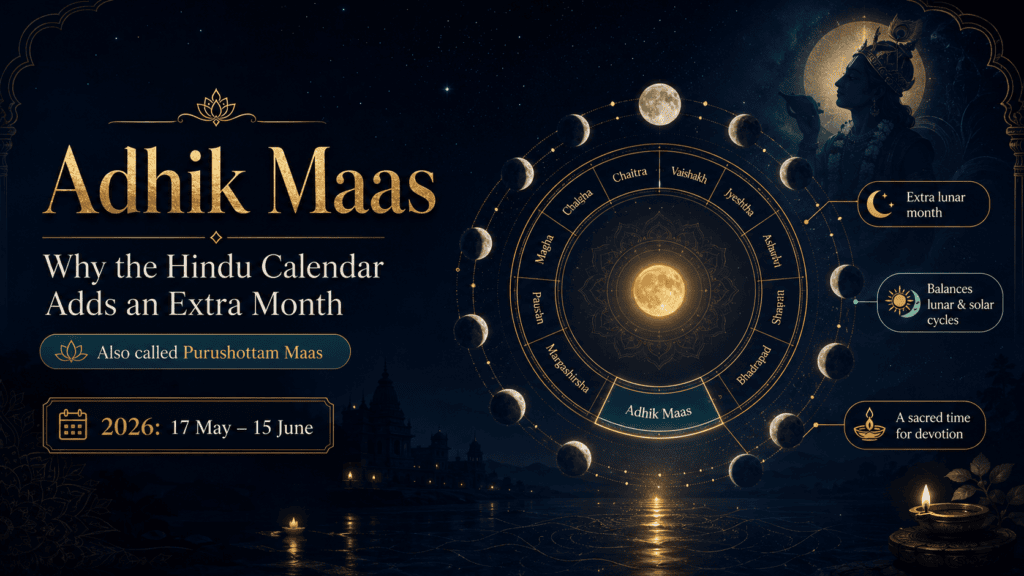
Purushottam Maas 2026, also known as Adhik Maas or Adhik Jyeshtha Maas, will begin on Sunday, May 17, 2026, and end on Monday, June 15, 2026. This extra lunar month is added to the Hindu calendar to balance the lunar and solar cycles.
Adhik Maas Meaning, Calendar Logic, and Names
Adhik Maas is one of the most interesting parts of the Hindu calendar, because it shows how carefully traditional timekeeping tries to keep the lunar calendar and solar calendar in balance. In simple words, Adhik Maas is an extra month or additional month added to the Hindu lunar system to correct the difference between the lunar year and the solar year.
The lunar month follows the movement of the Moon, while the solar month follows the movement of the Sun. A lunar month is about 29.5 days, more precisely around 29.531 days. This makes the lunar year roughly 354 days or, by another calculation, about 356.372 days. The solar year is around 365 days, more accurately 365.2422 days. Because of this, there is a yearly difference of about 10.87 days, commonly understood as an 11 days difference.
Over every three years, this gap becomes approximately one month. To correct that full month gap, the Hindu calendar makes a divine adjustment of time by adding Adhik Maas. That is why this month is sometimes explained as a spiritual and astronomical time correction. It keeps the lunar cycles and solar cycles aligned so that festivals, seasons, and sacred observances remain connected with the natural rhythm of time.
The word Adhik means extra, and maas means month. So Adhik Maas literally means “extra month.” It is also called Adhika-Masa, Masa, Maas, Purushottam Maas, Purushottam Month, and Mal Maas. In some traditions, the word Maal or Mal Maas was used because this month was once seen as unsuitable for many worldly celebrations. Some people called it a wasted maas or unclean month, but that meaning changed deeply when the month became connected with Lord Vishnu as Purushottam Maas.
In the normal sequence of Hindu months, the Sun usually changes from one Rashi or raashi to another zodiac sign. This transition is called sankranti. A normal lunar month has a Sankranti point, but Adhik Maas is a month that may be devoid of Sankranti, meaning there is no Rashi transition in that lunar month. Because of this, its position is not fixed. It can appear between two months in the fixed cycle of the Hindu calendar, so its occurrence looks somewhat random from the outside.
People sometimes compare Adhik Maas with a leap day in the English calendar, but the Hindu system does something larger: instead of only one extra day, it adds a whole leaped month. For example, 2018 had an Adhik Maas, and 17 May to 15 June 2026 is also given as a period connected with this extra month. This makes Adhik Maas both a calendar correction and a sacred period for inner correction.
Scriptural Glory, Puranic References, and Spiritual Merit
The spiritual importance of Adhik Maas is not based only on calendar mathematics. It is also praised in sacred references such as the Padma Purana, Skanda Purana, Brihannaradiya Purana, Gita, Vedas, and Dharma Sindhu. These texts and traditions describe this month as deeply connected with Lord Vishnu, Vishnu, Lord Visnu, Merciful Vishnu, Lord Purushottam, and Purushottam, the Supreme person.
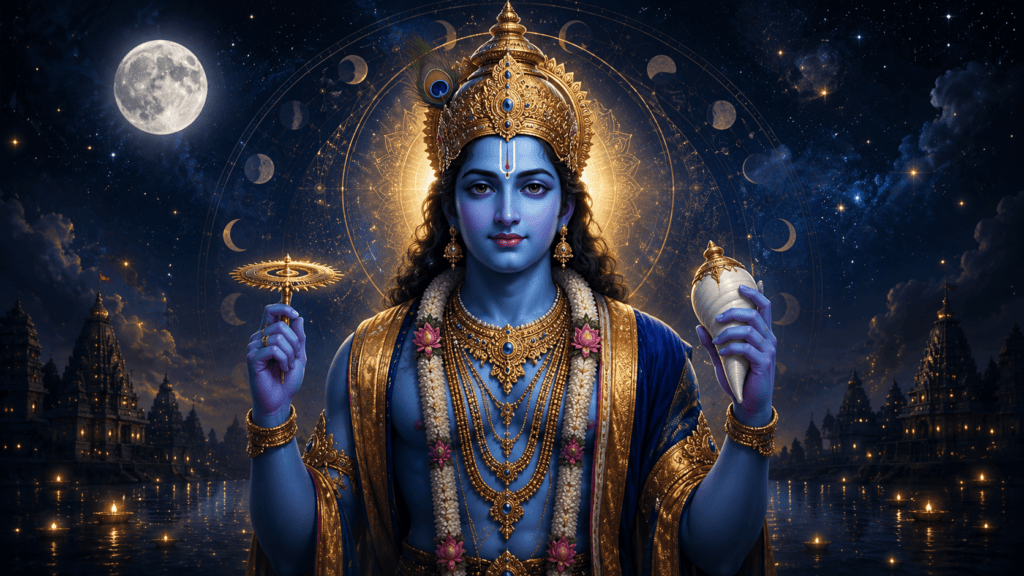
Adhik Maas is also strongly linked with Lord Sri Krishna, Sri Krishna, Lord Krishna, and Krishna. In devotional understanding, it is called Krishna’s favorite month, the supreme month, the holiest month, the holiest among months, and the best of all months. The month receives the name Purushottam because Lord Vishnu is believed to have given it His own name and grace.
Texts such as Purushottam Maas Mahatmya, Purushottama Mahatmya, Purushottam Granth, and Purushottama Granth describe the glory of all months and the rare spiritual value of this period. The month is said to carry exceptional spiritual merits, unlimited spiritual merits, Punya, pious credits, and virtues. Devotees believe that worship done in this month can reduce past sinful reactions, purify bad karma reactions, remove previous sins, and weaken the weight of past life sins.
In many traditional accounts, this month is associated with Krishna-bhakti, devotional service, devotional practice, and sincere worship of Radha and Krishna, Sri Sri Radha Krishna, Radha, and Sri Radha. The idea is not only to receive blessings, but to change the direction of one’s life from outer attachment toward spiritual maturity.
The scriptural mood around Adhik Maas is filled with names and images of spiritual authority: Naimisaranya Sages, Durvasa Muni, Valmiki Muni, Narada Muni, sages, rishis, devotees, demigods, and even Laksmi Devi are mentioned in different devotional descriptions. These references show that the month was never treated casually. It was seen as a rare chance for the soul to move toward moksha, liberation, Parama Pada, and the supreme state.
There are also devotional ideas like Goloka Vrindavana, Goloka, Krishna’s supreme planet, spiritual world, and divine abode connected with the glory of this month. Such descriptions may sound poetic, but their purpose is clear: Adhik Maas is a time to turn the mind toward higher life, reduce mental afflictions, physical afflictions, and inner sufferings, and develop a stronger spiritual platform for further evolution.
Vrata, Worship, Puja, Mantras, and Daily Practices
The practical side of Adhik Maas is centered on discipline, devotion, and simple daily worship. Instead of repeating every similar term separately, we can understand Purushottam Vrata, Vrat, vow, austerity, and fasting as one connected family of spiritual discipline. The purpose is not to make life difficult, but to make the mind steady.
Many devotees observe fasting on Ekadashi, Amavasya, Poornima, Purnima, and Thursdays. These are considered auspicious days with special significance, especially when they fall during Adhik Maas. The Ekadashi date is especially respected because Ekadashi is already connected with Vishnu worship, self-control, and devotion. In this month, such observances are believed to bring auspicious results.
A simple daily routine can be very effective. One may wake up early, take a bath, clean the prayer space, and place a Lord Vishnu picture, Shri Krishna idol, Shri Ram, Lakshmi Narayan, or Tulsi Mata. Then one may light a diya, use a ghee diya, offer incense, yellow flowers, fruits, Tulsi leaves, and perform water offering. Many people also practice Tulsi water offering or offering water to Tulsi, because Tulsi is considered dear to Lord Vishnu.
Important devotional practices include Lord Vishnu prayers, Vishnu Pooja, worship, prayer, chanting, mantra chanting, daily chanting, reading scriptures, recitation, listening, and visiting temples. Devotees read Bhagavad Gita, a Bhagavad Gita chapter, Vishnu Sahasranama, Bhagavat Purana, Ramayana, Bhagavat Katha, Shrimad Bhaagwat, and other holy texts, religious texts, and holy books.
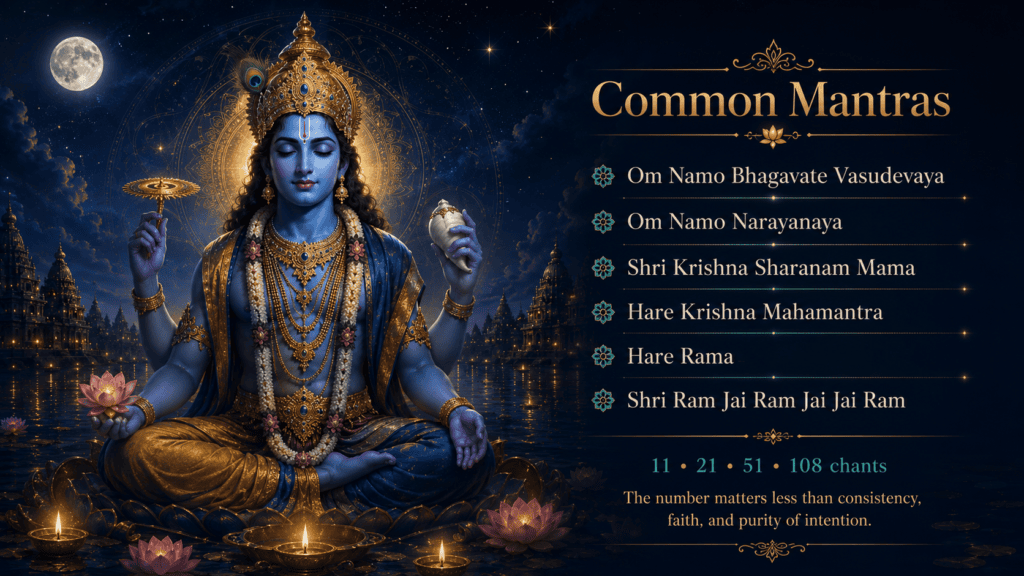
Common mantras include Om Namo Bhagavate Vasudevaya, Om Namo Narayanaya, Shri Krishna Sharanam Mama, Hare Krishna Mahamantra, Hare Rama, and Shri Ram Jai Ram Jai Jai Ram. Some also chant Vishnu Mantras or a specific Vishnu mantra 11, 21, 51, or 108 times. The number is less important than consistency, faith, and purity of intention.
The beauty of Adhik Maas is that even simple rituals can become powerful practices when done with a clean heart. Lighting a lamp, chanting one mantra, reading a few verses, or offering water to Tulsi can become a sincere act of daily devotion and surrender to God.
Inner Transformation, Self-Development, and Spiritual Psychology
The deeper purpose of Adhik Maas is inner correction. It is not only about ritual; it is about becoming a better person, a calmer person, a kinder person, and a more spiritually connected person. When I first studied this month from a Panchang and cultural perspective, what stood out most was not the extra calendar calculation, but the idea of an extra chance. Life rarely gives extra time, and Adhik Maas teaches us to use that extra time wisely.
This month encourages human beings to slow down, pause, reflect, realign, and observe life. It is a sacred opportunity for self-development, self-transformation, self-improvement, reflection, introspection, and self-evaluation. Instead of constantly chasing money, status, and comfort, it invites a person to examine material attachment and move toward spiritual awareness.
Adhik Maas supports spiritual upliftment, spiritual advancement, spiritual importance, spiritual benefits, spiritual upgrade, and spiritual energy strengthening. The goal is inner cleansing, inner peace, inner transformation, and mind purification. Through discipline, self-discipline, simplicity, gratitude, forgiveness, compassion increase, and ego reduction, a person begins to live closer to dharma.
In traditional Indian thought, human life is made of many layers. The body is linked with pancha bhutas, the five elements, and works through the five senses. The inner instrument includes mind-intellect and ego. But beyond these, there is the Atman, the spiritual entity within us. Adhik Maas is considered a beneficial month and powerful month because it helps a person reconnect with this deeper self.
It is also a time for body detoxification, building physical strength, gaining mental strength, stabilizing emotional strength, and deepening spiritual strength. A sattvik lifestyle, sattvik diet, Satvic food, and even a full-month sattvik routine help reduce negative habits, negative thoughts, and negative nature. In this way, Adhik Maas becomes a practical period of spiritual psychology, not just religious observance.
Charity, Daan, Food Donation, and Social Good
One of the strongest practices of Adhik Maas is charity, also called daan. In Hindu thought, donation, acts of kindness, satkarmas, and good deeds are not only social actions; they are also spiritual purification. But the spirit behind giving matters. A right attitude and rewardless giving are more important than showing off.
Traditional forms of charity include anna daan, vastra daan, food donation, food giving, donating food, water donation, clothes donation, grains donation, ghee donation, jaggery donation, money donation, yellow items donation, yellow grains donation, chana dal, turmeric, sweets donation, and other offerings done according to capacity and ability.
Feeding living beings is also considered powerful. This includes cow feeding, animal feeding, feeding cows, feeding dogs, feeding birds, feeding animals, and feeding someone who is hungry. Helping poor people, needy people, a needy person, or even a hungry animal is considered spiritually valuable. Even a simple roti offering, one meal, or one glass of water given with love can carry deep spiritual value.
Some traditions also connect Adhik Maas charity with visiting a holy place, staying in holy places, taking a sacred bathing in a holy river, and practicing devotion in a spiritually charged atmosphere. The phrase Residence in Holy Place and 1000 times benefit expresses the belief that spiritual acts done in this month multiply in effect.
Charity in Adhik Maas is not only about gaining merit. It is about reducing selfishness. It softens the ego, increases compassion, and reminds us that spiritual life is incomplete without service to others.
Festivals, Ekadashi, Sankashti, and Number 33 Traditions
Several important observances are associated with Adhik Maas. Under Purushottam Maas Important Festivals, the most widely discussed are Padmini Ekadashi, Parama Ekadashi, Vibhuvana Sankashti, Ganga Dussehra, and Durva Ashtami, depending on the calendar situation.
According to traditional references, Padmini Ekadashi occurs at the Adhika Maas beginning and is considered a supreme Ekadashi. Observing it with devotion is believed to bring Goddess Lakshmi grace. The second Paksha of Purushottam Maas includes Parama Ekadashi, which is connected with desired fruits in this world and the next world.
During Krishna Paksha, Sankashti may be observed as Vibhuvana Sankashti, a rare Sankashti and important Sankashti. On this day, Lord Ganapati is worshipped in the Vibhuvana Ganesha form, and devotees may offer coconut Laddus as special Naivedya.
If Jyeshtha Adhika Maas occurs, then Ganga Dussehra may be observed in that Adhik month itself, according to the regular month rule. The same type of rule can apply to Durva Ashtami and other festival observances depending on the Panchang tradition.
In Maharashtra traditions, the number 33 is often treated as meaningful during Adhik Maas. Devotees may offer 33 diyas, 33 sweets, 33 donations, or follow 33 days spiritual discipline. This is a symbolic offering connected with divine energies, 33 crore devatas, and the traditional concept of honoring divine energies.

Remedies for Money, Debt, Business, Protection, and Evil Eye
Many people also observe Adhik Maas for practical spiritual remedies. These should be understood with maturity. The aim is not quick superstition, but spiritual discipline joined with practical effort.
For money flow remedies, devotees pray not only for wealth but for stable income, pure income, and dharmic income. Worship of Lord Vishnu and Maa Lakshmi, keeping a clean home, avoiding waste, and practicing wasteful spending avoidance are considered helpful. Feeding cows and birds, donating yellow items, and chanting Vishnu mantras are also common practices.
For Karz Mukti or debt freedom, one may chant with debt relief intention, donate food or grains, avoid unnecessary loans, and ask for discipline, clarity, and financial wisdom. But spiritual remedies must be supported by a practical repayment plan. Adhik Maas supports both devotion and self-correction.
For business growth and client attraction, one may light a northeast direction diya in the home workspace, do work start chanting, maintain a clean workplace, and practice business ethics. Avoiding dishonesty is essential. Dishonesty avoidance, right clients, ethical growth, timely payments, and long-term stability are more aligned with Vishnu worship than greedy shortcuts.
For protection and evil eye protection, some devotees recite Hanuman Chalisa, keep Tulsi near entrance, light a diya in the prayer space, and do protection prayer. The deeper remedy is fear-based thinking avoidance, aura strengthening, and positive actions. True protection comes from discipline, clean conduct, prayer, and a stable mind.
Do’s, Don’ts, Restrictions, and Avoided Activities
Adhik Maas has a clear spiritual direction. The main Do’s During Adhik Maas include spiritual activities, learning, healing, mantra sadhana, meditation, seva, spiritual practices, purification, charity, scripture reading, and devotion.
The Don’ts During Adhik Maas are mainly connected with avoiding major worldly beginnings. Traditional rules mention auspicious works avoidance, especially marriage, marriage ceremonies, housewarming, house warming, housewarming ceremonies, griha pravesh avoidance, mundan avoidance, Mundana, engagement avoidance, major material projects, major material ventures avoidance, purchasing vehicles, new items, and sometimes new clothes wearing.
Scriptural and ritual texts also mention restrictions around Upakarma, Utsarga, Ashtaka Shraddha, Mauji-Bandhana, Upanayana, pilgrimage, Vastu-related works, Deva-Pratishtha, wells donation, gardens donation, Tula-Purusha Dana, weight-equivalent donation, Yajna rituals, Adhana, Garbhadhana, Agnyadhana, first Darshan, deity first Darshan, Sannyasa, Kamya Vrishotsarga, deceased person bull release, Rajyabhisheka, and coronation.
Other avoided rites include Annaprashana, Samavartana, Atikranta Namakarana, delayed naming ceremony, Samskara, Pavitropana, Damanarpana, Shravana Karma rituals, Sarpa Bali, ritual cooking arrangements, Shayana festival, Parivartana festival, God festivals, vows, ordeals, and similar non-urgent rites. These are generally postponed to a Shuddha Maas or regular month.
However, Naimittika Karmas, such as Rajodosha remedies, Agni Adhana, extinguished sacred fire restoration, Punah Pratishtha, and re-establishment rituals, may be treated differently when they are connected with an immediate cause. In some cases, there is said to be no inauspicious effect or ritual restriction if the act is necessary and timely. Texts also mention Agrayana Ishti during famine or severe scarcity, and note that Yugadi, Manvadi, and Shraddha rites may be repeated in both months.
Certain observances can continue across two months. For example, if Vaishakha Adhika Maas occurs, then bathing-related Vrats that began on Chaitra Purnima may conclude on the regular Vaishakha Purnima, creating a two-month observance. A new Vrat commencement and new Vrat conclusion are generally avoided in Mal Maas unless tradition permits.
On the personal conduct side, one should avoid non-vegetarian food, meat, fish, chicken, eggs, gambling, alcohol, tobacco, and other addictions. This month is also used for addictions reduction, anger reduction, jealousy reduction, overthinking reduction, unnecessary spending reduction, and negative speech avoidance. Avoid gossip, lies, cruelty, disrespect toward elders, teachers, parents, women, animals, and sacred practices.
Adhik Maas should not be used for greed rituals, harming others, or manipulation. Its spirit is the opposite: it asks for laziness avoidance, fear avoidance, negativity avoidance, and a sincere return to prayer, service, discipline, and God-centered living.